In shortDuring strong shaking, protect yourself first. Near the coast, strong shaking or a long, slow earthquake can mean a tsunami risk: move promptly to high ground or a designated tsunami evacuation building. For heavy-rain hazards, everyone in a dangerous area should evacuate by Alert Level 4. Do not wait for Level 5.
Quick guide
| Check | What to know |
|---|---|
| Overview | During strong shaking, protect yourself first. Near the coast, strong shaking or a long, slow earthquake can mean a tsunami risk: move promptly to high ground or a designated tsunami evacuation building. For heavy-rain h |
| Earthquake actions depend on where you are | For a tsunami warning, leave exposed coastal areas even if you did not feel an earthquake. Do not go to the shore to watch. Waves can repeat; remain away until the warning or advisory is lifted and local instructions per |
| Understand the evacuation levels | Evacuating means getting out of danger, not automatically going to the nearest school. A safe relative's home can be an option. Staying upstairs at home is appropriate only where the hazard, building and expected floodin |
| Weather information changed in 2026 | JMA introduced level numbers in weather-disaster information and a Level 4 Danger Warning (危険警報) category in May 2026. These weather-risk messages support evacuation decisions; they are not the same document as a municip |
| Fill in a two-location plan | This is our preparation worksheet, not an official local evacuation map. |
| Official sources | • JMA: earthquake and tsunami actions |
Home
Identify local risks and a safe destination.
Work
Check workplace instructions and the route.
Stay connected
Agree on contacts and keep emergency supplies.
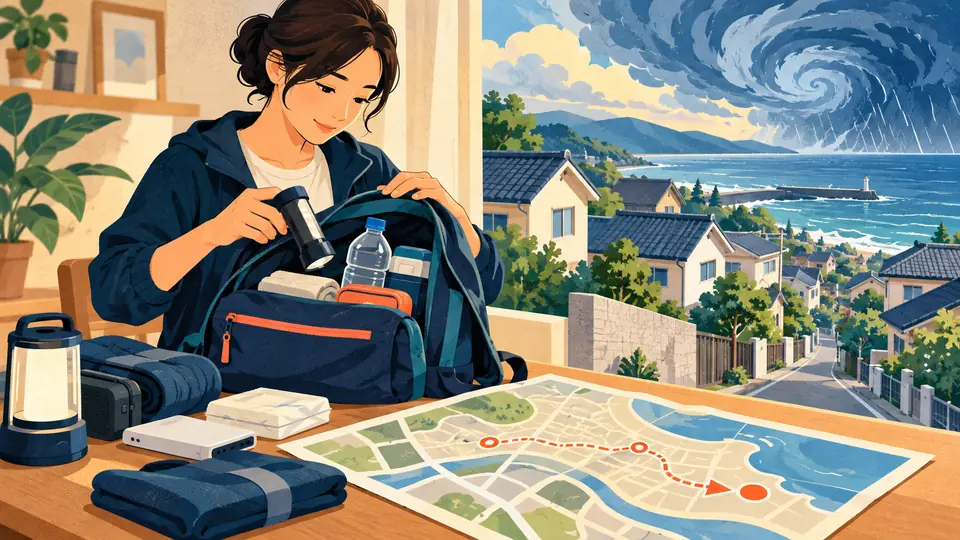
A visual summary of this guide. Read the relevant sections below for conditions and exceptions.
Overview
During strong shaking, protect yourself first. Near the coast, strong shaking or a long, slow earthquake can mean a tsunami risk: move promptly to high ground or a designated tsunami evacuation building. For heavy-rain h
During strong shaking, protect yourself first. Near the coast, strong shaking or a long, slow earthquake can mean a tsunami risk: move promptly to high ground or a designated tsunami evacuation building. For heavy-rain hazards, everyone in a dangerous area should evacuate by Alert Level 4. Do not wait for Level 5.
Earthquake actions depend on where you are
For a tsunami warning, leave exposed coastal areas even if you did not feel an earthquake. Do not go to the shore to watch. Waves can repeat; remain away until the warning or advisory is lifted and local instructions per
| Location | Immediate action |
|---|---|
| Indoors | Protect your head, take cover where possible, and stay away from falling objects. Do not rush outside or try to put out a flame while violent shaking continues. |
| Outdoors | Move away from block walls, glass and signs that may fall. |
| Train or bus | Hold a rail or strap and follow staff instructions. |
| Hotel or other crowded building | Follow the facility's emergency directions without rushing the exits. |
For a tsunami warning, leave exposed coastal areas even if you did not feel an earthquake. Do not go to the shore to watch. Waves can repeat; remain away until the warning or advisory is lifted and local instructions permit return. Earthquake intensity and the heavy-rain alert levels below are different scales.
Understand the evacuation levels
Evacuating means getting out of danger, not automatically going to the nearest school. A safe relative's home can be an option. Staying upstairs at home is appropriate only where the hazard, building and expected floodin
| Level | Your action for rain-related hazards |
|---|---|
| 1 | Pay attention to possible worsening conditions. |
| 2 | Check the hazard map, evacuation destination and route. |
| 3: 高齢者等避難 | People who need time to evacuate, and their helpers, leave dangerous places. Others prepare and consider early evacuation. |
| 4: 避難指示 | Everyone in dangerous places evacuates. |
| 5: 緊急安全確保 | A disaster has happened or is imminent. Take the safest available action immediately; safe evacuation may no longer be possible. |
Evacuating means getting out of danger, not automatically going to the nearest school. A safe relative's home can be an option. Staying upstairs at home is appropriate only where the hazard, building and expected flooding allow safe indoor refuge; it is not a general answer to landslide or tsunami risk. Confirm this against your municipality's map before a storm.
Weather information changed in 2026
JMA introduced level numbers in weather-disaster information and a Level 4 Danger Warning (危険警報) category in May 2026. These weather-risk messages support evacuation decisions; they are not the same document as a municip
JMA introduced level numbers in weather-disaster information and a Level 4 Danger Warning (危険警報) category in May 2026. These weather-risk messages support evacuation decisions; they are not the same document as a municipality's evacuation order. Read the affected area and hazard as well as the number. Check JMA risk maps and local instructions together.
Do not wait for an app notification if the situation around you is already dangerous. Conversely, a distant alert does not mean every address has the same exposure.
Fill in a two-location plan
This is our preparation worksheet, not an official local evacuation map.
This is our preparation worksheet, not an official local evacuation map.
| Item | Home | Workplace |
|---|---|---|
| Flood, landslide or tsunami exposure | ___ | ___ |
| Safe destination for that hazard | ___ | ___ |
| Walking route and alternative | ___ | ___ |
| Person who needs help | ___ | ___ |
| Contact if trains stop | ___ | ___ |
Save the municipality's map offline and prepare water, food, necessary medicines, a light, battery power and copies of important information according to your household's needs. Keep supplies reachable; do not return to a dangerous building to retrieve them.
The Tourism Agency's Safety tips app offers multilingual disaster information in 15 languages. Set the locations and notification permissions in advance. Also save JMA's multilingual information. Test these settings on an ordinary day.
Official sources
• JMA: earthquake and tsunami actions
• JMA: earthquake and tsunami actions
• Cabinet Office: evacuation guidance revised March 2026
• JMA: 2026 weather information changes
• Tourism Agency: multilingual disaster tools
Read the other StayWorksNow resident guides to prepare useful contacts before you need them.
Confirm the rules yourself
Sources checked: . Official source pages may be in Japanese.
Get StayWorksNow launch updates
Pre-register with your name and email, then confirm your email address. We’ll let you know about the StayWorksNow launch.
Pre-register for launch updatesJob listings and applications are not open yet. Pre-registration is free. It is not a job application and does not guarantee employment or permission to work. No CV or photo is needed.